
Meta Title: Stone‑Coated Metal Roof Tiles Typhoon Resistance | Wind‑Proof Roofing for Coastal Zones Meta Description: Learn why stone‑coated metal roof tiles perform excellently under typhoon‑force winds. Understand interlocking design, mechanical fastening, comparison with traditional tiles and key installation tips for storm‑prone coastal areas.
Introduction
Coastal and tropical regions regularly face typhoons, cyclones and extreme gusty winds. When powerful storms strike, roofs bear the brunt of wind uplift, flying debris and wind‑driven rain. Many conventional roofing materials suffer tile lifting, cracking or complete blow‑off during typhoon seasons, bringing property damage and safety risks.
Homeowners, contractors and project developers in high‑wind zones keep searching for reliable storm‑resistant roofing solutions. Stone‑coated metal roof tiles have grown popular for typhoon‑prone locations, combining aesthetic appeal with proven high‑wind performance. This article breaks down how stone‑coated metal roofs stand against typhoons, how they compare with other roofing options, and what details decide real‑world wind‑storm performance.
What Causes Roof Damage During Typhoons?
Most roof failures in typhoons come from wind uplift force. Strong winds create pressure differences above and below roof surfaces. When air sneaks under tile edges, it generates upward lifting power that can pry roofing materials loose.
Traditional clay tiles, concrete tiles and asphalt shingles have clear weaknesses under typhoon conditions:
- Clay & concrete tiles: Mostly rely on gravity to stay in place. Heavy weight does not equal strong wind‑uplift resistance. Violent gusts can shift, crack or blow them away, creating flying dangerous debris.
- Asphalt shingles: Prone to edge curling, peeling and tearing under repeated high‑speed winds. Once one shingle lifts, surrounding layers get damaged rapidly.
- Loose installation gaps allow wind to infiltrate underneath and amplify uplift pressure.
Even visually solid‑looking roofs can fail if the system cannot counteract uplift force brought by typhoon‑grade wind.
Why Stone‑Coated Metal Tiles Perform Well in Typhoon Conditions
Stone‑coated metal roofing achieves typhoon‑level wind resistance through three core factors: high‑strength steel substrate, precision interlocking panel structure, and secure mechanical fastening system.
1. High‑tensile galvalume steel base
The substrate is high‑strength galvalume (aluminum‑zinc alloy coated) steel sheet. Unlike brittle ceramic or concrete materials, steel bends rather than shatters under heavy wind load and flying‑debris impact. It maintains structural integrity instead of breaking into sharp fragments during storms.
The overall system stays lightweight (around 5‑8 kg per square meter). Low dead load reduces pressure on building roof frames, which is a big plus for new builds and retrofitting old houses in coastal zones.
2. Interlocking overlapping profile design
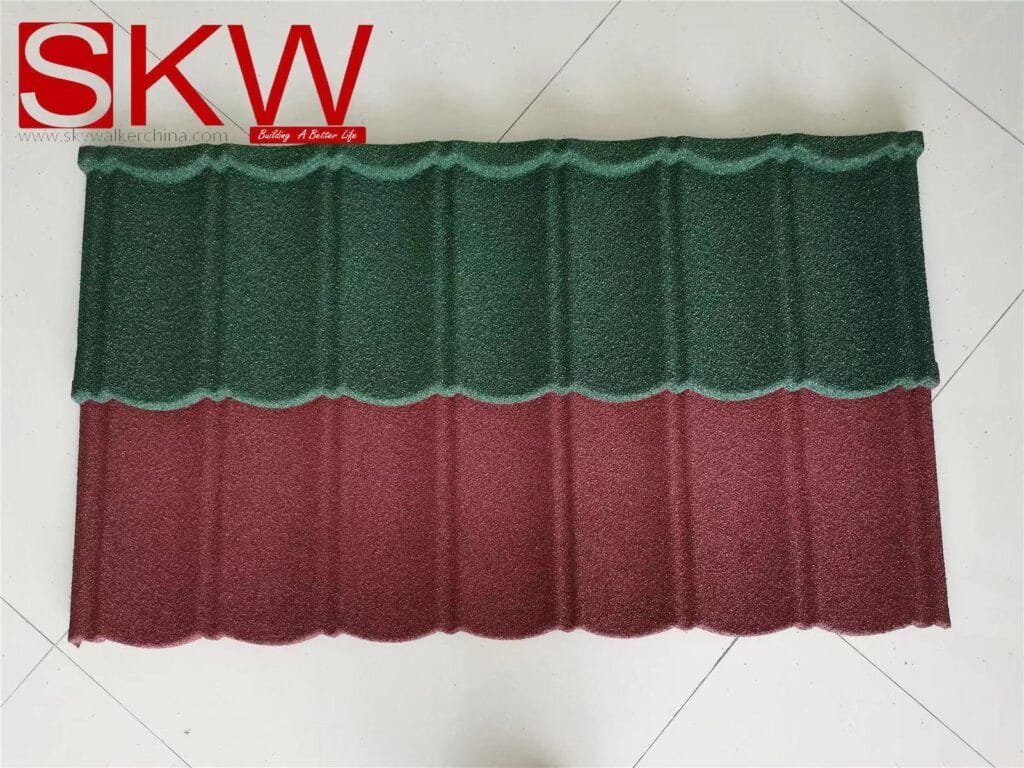
This is the core anti‑typhoon feature. Each tile locks firmly with adjacent panels on top, bottom and side edges. Instead of working as separate individual pieces, tiles connect together to form one unified roof skin. Wind cannot easily catch tile edges to pry single panels away.
Deep overlapping laps also block wind‑driven heavy rain from blowing underneath the roof layer, preventing water leakage even under typhoon‑level rainfall. The textured stone‑granule surface further disturbs wind flow and lowers aerodynamic lifting effect.
3. Mechanical concealed fastening
Rather than gravity‑relying placement, stone‑coated metal tiles are mechanically fixed onto roof battens using corrosion‑resistant screws or clips. Fasteners are concealed under overlapping tile layers, avoiding exposed nail‑head loosening caused by long‑term wind vibration.
When installed strictly following manufacturer specifications, quality stone‑coated metal roof systems can pass strict wind uplift tests, reaching ASTM D3161 Class F or Class H rating, capable of resisting sustained strong winds equivalent to typhoon‑grade conditions.
Stone‑Coated Metal Tile VS Traditional Roofing in Typhoon‑Prone Areas
表格
| Roofing Material | Typhoon‑Wind Performance | Key Weakness in Storms |
|---|---|---|
| Stone‑coated metal tile | Excellent; interlocking + mechanical fixing; resists uplift | Performance drops if installation is sub‑standard |
| Clay / Concrete tile | Poor‑to‑moderate; gravity‑dependent; easy to blow loose | Crack, shatter, become flying hazards |
| Asphalt shingle | Moderate‑poor; edges curl & tear easily | Sequential peeling once one piece fails |
| Metal corrugated sheet | Good wind strength | High rain noise; easily‑visible rust risk in coastal salt air |
Important note: No roofing material is 100% indestructible against extreme super typhoons. Yet stone‑coated metal systems deliver far better storm‑survival rates compared with mainstream traditional tile options.
Critical Installation Rules for Typhoon Zones
Great product performance heavily depends on correct installation. Even premium stone‑coated metal tiles will fail in typhoons if fitted improperly. Here are key requirements for high‑wind coastal projects:
- Use manufacturer‑approved interlocking profiles for coastal typhoon‑risk zones.
- Apply anti‑corrosion stainless‑steel or hot‑galvanized fasteners and clips. Never use ordinary low‑carbon nails.
- Follow local wind‑load building codes for fastener spacing. Tighter fastener spacing is required for open‑site, hilltop and seafront buildings.
- Install high‑quality synthetic wind‑resistant underlayment, not ordinary cheap felt paper.
- Pay special attention to roof edges, gable ends, ridge areas — these locations receive the strongest wind uplift during typhoons. Add extra fixing points as needed.
- Ensure correct panel overlapping direction to stop wind‑driven rain intrusion.
For wholesale buyers and contractors: Always confirm wind‑resistance test reports before ordering materials for coastal typhoon‑zone projects.
Bonus Benefits for Storm‑Prone Coastal Homes
Beyond typhoon wind resistance, stone‑coated metal tiles bring extra advantages for seaside buildings:
- Impact resistance: The steel substrate tolerates hits from wind‑blown tree branches and debris during storms.
- Salt‑atmosphere corrosion resistance: Galvalume steel base plus stone‑granule coating handles coastal salty humid air well when quality material is selected.
- Long service life: Properly installed roofs can serve 50+ years, reducing repeated re‑roofing costs after storm damage.
- Safety: Will not break into flying sharp fragments when under storm stress, lowering secondary injury risks.
Conclusion
Typhoon‑resistant roofing is not only about material strength, but the whole roof system including tile profile, fastening hardware and installation quality. Stone‑coated metal roof tiles stand out for coastal storm‑prone regions thanks to robust steel substrate, interlocking lock‑together design and mechanical fixing methods. Compared with clay tile, concrete tile and asphalt shingles, they deliver far superior anti‑uplift performance under typhoon‑force winds.
If you are a homeowner, builder or roofing wholesaler operating in cyclone‑hit coastal markets, choosing certified stone‑coated metal tiles plus strict code‑compliant installation will greatly boost your roof’s ability to survive severe typhoon weather.