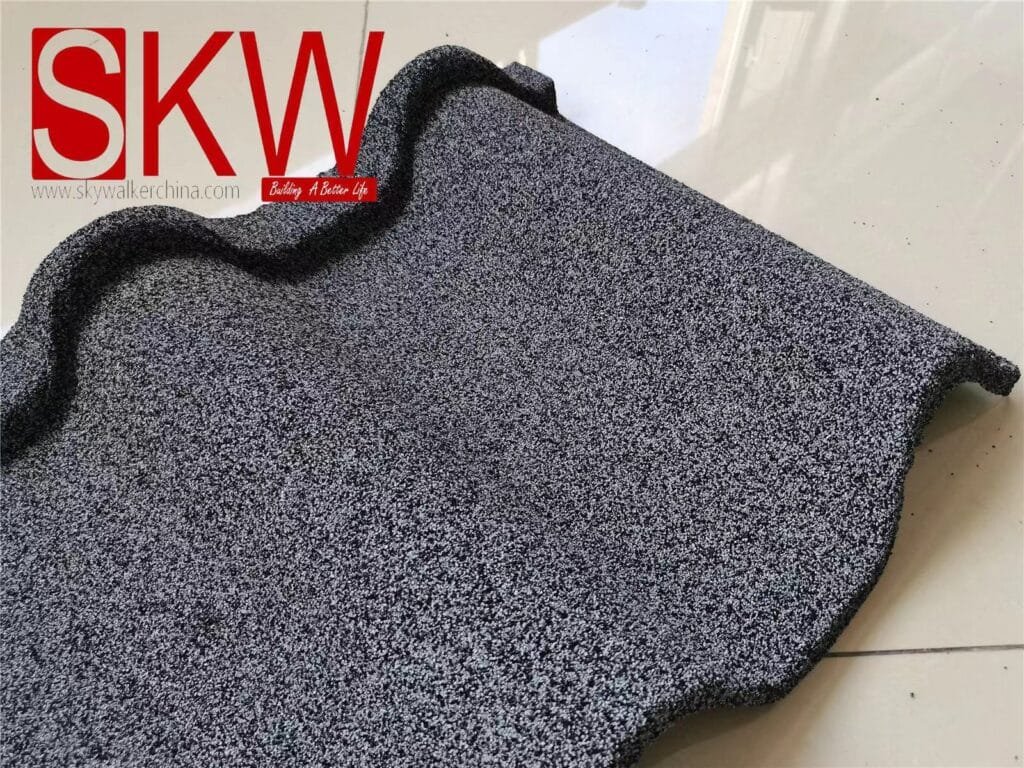

When investing in a new roof for your home, villa, or commercial building, lifespan is always the top priority for every property owner. No one wants to replace their roofing materials every decade or deal with frequent leakage, fading, and rust problems. Among all modern roofing options,stone-coated metal roofing has gained massive popularity worldwide for its durability, aesthetic appeal, and low maintenance. But the most common question remains: Exactly how many years can stone-coated metal roofing last?
In this detailed guide, we will break down the real lifespan of standard and premium stone-coated metal tiles, compare different quality grades, analyze key influencing factors, and help you understand why it outperforms traditional roofing materials.
1. Official Verified Lifespan of Stone-Coated Metal Roofing
Unlike asphalt shingles, resin tiles, and ordinary iron sheets with short service lives, high-quality stone-coated metal roofing features a multi-layer protective structure and industrial-grade anti-corrosion technology. Its service life varies significantly based on product quality grades, with authoritative test data and practical engineering verification supporting the figures:
- Low-Grade Inferior Roofs: 3–15 Years Cheap non-standard products use low-zinc substrates and ordinary colored sand without high-temperature sintering. They are prone to sand falling, color fading, rusting, and cracking. Their service life is only 3–5 years in harsh environments and barely 10–15 years in mild conditions, failing to match the long-term service life of buildings.
2. Lifespan in Different Climate & Environmental Conditions
- Ordinary Inland Climate (Dry, Mild Temperature) This is the most suitable environment for stone-coated metal roofs. Free from strong salt corrosion and extreme weather erosion, premium products can easily reach their designed 50-year lifespan, with almost no daily maintenance required.
- Coastal & Industrial Corrosive Environments Coastal areas feature high salt fog and humidity, while industrial zones have acid-base gas corrosion. Ordinary roofing materials age rapidly here. However, qualified stone-coated metal tiles with high anti-corrosion substrates can still serve steadily for more than 25 years in such harsh conditions.
- Extreme Weather Areas (Heavy Rain, Strong Wind, Hail, Large Temperature Difference) With a working temperature range of -30℃ to 70℃, stone-coated metal roofs resist cracking and aging from extreme temperature changes. Their integrated lap structure withstands 15-level strong winds, and the flexible stone sand layer buffers hail impact. They maintain intact performance without premature aging in severe weather.
3. Why Stone-Coated Metal Roofs Have Such a Long Lifespan? Core Structural Advantages
The ultra-long service life of stone-coated metal roofing stems from its scientific multi-layer composite structure, which fundamentally solves the pain points of traditional roof materials such as easy rust, easy fading, and poor weather resistance:
- Anti-Corrosion Metal Substrate The core base is high-purity aluminum-zinc galvanized steel plate. The unique aluminum-zinc alloy layer forms a dense protective film on the steel surface, providing 5 times better salt spray and corrosion resistance than ordinary galvanized sheets, effectively preventing substrate rust and damage.
- High-Temperature Sintered Basalt Stone Sand Layer The surface is covered with natural basalt particles sintered at 800℃ high temperature. Unlike ordinary colored sand, it features high adhesion, anti-oxidation, and UV resistance, avoiding sand falling and color fading, and maintaining a new roof appearance for decades.
- Multi-Layer Protective Coating Professional adhesive layers and surface sealant layers tightly bond the stone sand and metal substrate, forming an integrated waterproof, anti-aging, and weather-resistant protective system to isolate external air, rainwater, and ultraviolet radiation.
4. Lifespan Comparison: Stone-Coated Metal Roof vs. Traditional Roofing Materials
To intuitively reflect its durability, we compared the service life of mainstream roofing materials on the market:
- Asphalt Shingles: 10–15 years, prone to aging, curling, and water leakage, requiring frequent replacement
- Resin Tiles: 15–20 years, easy to deform and fade under long-term UV exposure
- Ordinary Iron Sheet Roofs: 5–10 years, easy to rust and corrode, with poor wind resistance
- Clay & Cement Tiles: 20–30 years, fragile, easy to crack and fall off in strong winds and hail
- High-Quality Stone-Coated Metal Tiles: 30–50+ years, durable, wind-proof, hail-resistant, and maintenance-free for long-term use
It is obvious that stone-coated metal roofing has an absolute advantage in service life, realizing one-time installation and lifelong use, and greatly reducing the later maintenance and replacement cost of the roof.
5. How to Extend the Lifespan of Stone-Coated Metal Roofs?
Although high-quality stone-coated metal tiles are extremely durable, correct installation and simple daily maintenance can maximize their service life, even exceeding the official design life:
- Choose regular manufacturers and Grade A qualified products, avoiding low-cost inferior tiles with short service life
- Follow standard construction specifications to ensure tight lap joints and firm screw fixation, preventing water leakage and loose tiles
- Regularly clean roof debris, fallen leaves, and accumulated water to avoid long-term water soaking corrosion
- Check the roof sealant and lap parts every 3–5 years, and repair individual loose stone sand in time
Final Verdict
To sum up, the real lifespan of stone-coated metal roofing depends on product quality and usage environment. Genuine high-quality stone-coated metal tiles have a stable service life of 30–50 years, and can last longer with good maintenance, fully matching the service life of modern buildings. It is far more durable and cost-effective than all traditional roofing materials, making it the ideal long-term roofing solution for villas, residential buildings, scenic spots, and industrial plants.
If you are looking for a weather-resistant, long-life, and low-maintenance roofing material, stone-coated metal roofing is definitely your most cost-effective choice!