Summer heat brings one of the most common roofing questions for homeowners and builders: do stone-coated metal roofs get hot in summer? Many people worry that metal roofing will trap excessive heat, raise indoor temperatures, and spike air conditioning bills during hot weather. The short answer is simple: stone-coated metal roofs do warm up under direct sunlight, but they do not make your house hotter—and they stay far cooler than traditional asphalt, tile, or shingle roofs in summer. With unique heat-reflective properties and optimized structural design, they deliver superior thermal performance and energy efficiency for residential and commercial buildings. In this guide, we will break down their summer heat performance, compare them with other roofing materials, and share practical tips to keep your stone-coated metal roof cooler all summer long.
1. Why Do People Think Metal Roofs Are Hot?
The misunderstanding that metal roofs overheat in summer comes from basic physical intuition: metal conducts heat faster than organic materials like asphalt and wood. On scorching summer days, any roof exposed to direct solar radiation will absorb heat and rise in surface temperature. Uncoated bare metal sheets can heat up quickly under full sun, which leads many homeowners to assume all metal roofing has poor heat resistance.
However, stone-coated metal roofing is completely different from ordinary bare metal roofs. Its multi-layer structure fundamentally changes heat absorption and transfer rules, solving the overheating flaws of traditional metal roofs while retaining all the durability advantages of metal materials.
2. Summer Heat Performance of Stone-Coated Metal Roofs
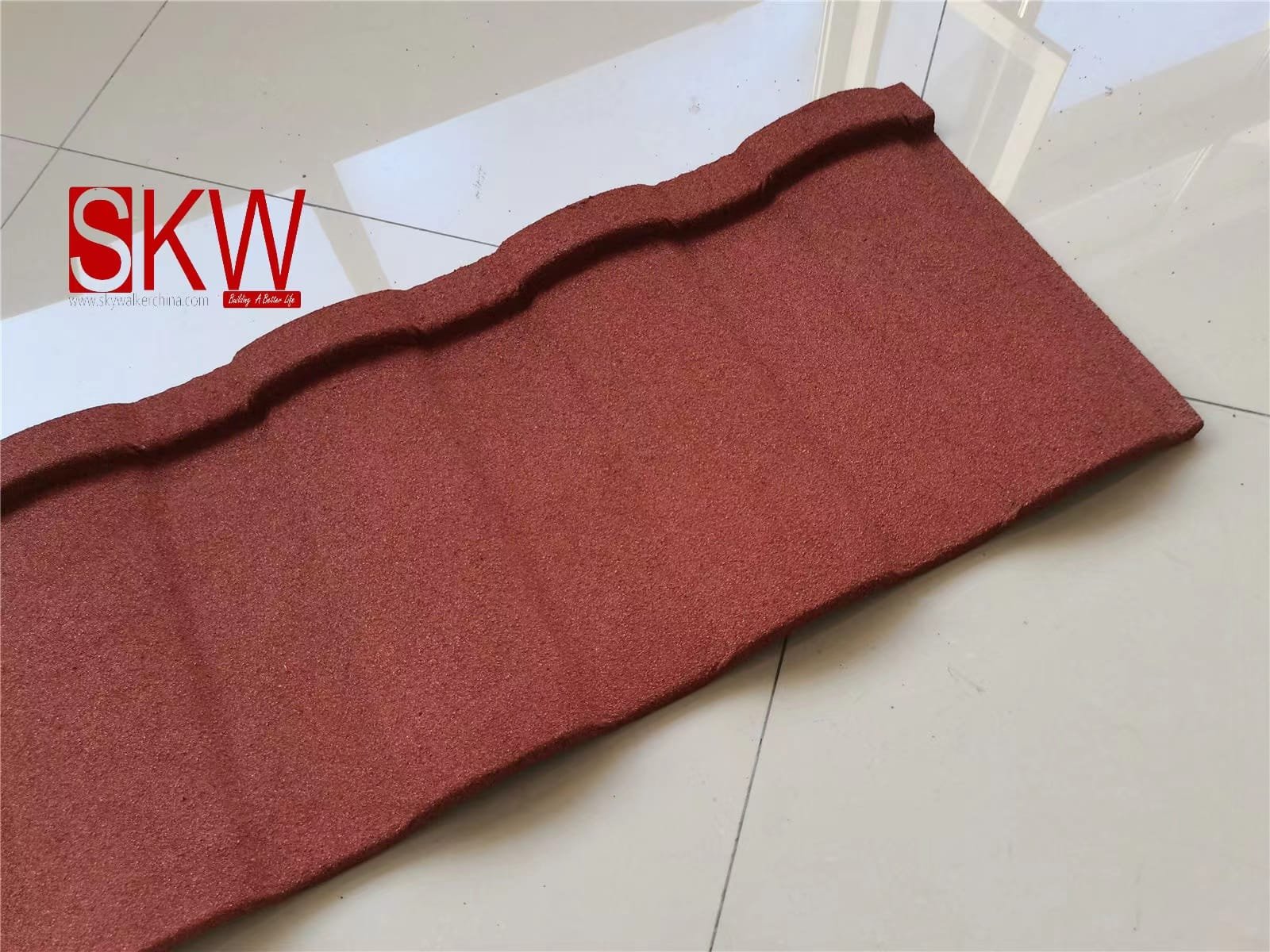
Stone-coated metal roofs feature a professional composite structure: a high-strength galvanized steel base, anti-rust primer layer, adhesive layer, and natural stone chip coating on the surface. Each layer plays a key role in reducing summer heat buildup, making it a top choice for hot climates.
2.1 Superior Solar Reflectivity & High SRI Value
The natural stone chip finish is the core cooling feature of this roofing material. Unlike dark asphalt shingles that absorb over 90% of solar heat, high-quality stone-coated metal roofs use reflective pigments and natural stone grains to reflect up to 70% of solar energy and UV rays. They boast a high SRI (Solar Reflectance Index), the industry standard for measuring roof heat resistance. A higher SRI value means the roof surface absorbs less heat and stays cooler under intense sunlight.
Even in peak summer heat, the surface temperature of a stone-coated metal roof is 10–15°C lower than traditional asphalt roofs. Most importantly, it avoids the extreme overheating (up to 88°C) that dark asphalt roofs often reach under direct sun.
2.2 Fast Heat Dissipation, No Heat Storage
Another key advantage is its zero heat storage performance. Traditional asphalt and clay tile roofs are thick and porous, absorbing massive heat during the day and releasing it slowly at night, keeping your house hot long after sunset. In contrast, stone-coated metal roofs heat up quickly but dissipate heat rapidly once sunlight fades. They do not trap residual heat on the roof surface or in the attic, allowing indoor temperatures to drop naturally after sunset.
2.3 Block Heat Transfer Effectively
The multi-layer composite structure acts as a professional thermal barrier. The galvanized steel base isolates indoor and outdoor temperature exchange, while the stone chip coating buffers external high temperature. When installed with a standard ventilated air gap between the roof panel and decking, it further blocks conductive heat transfer, preventing outdoor summer heat from penetrating into the attic and living spaces.
3. Stone-Coated Metal Roof vs. Traditional Roofs: Summer Heat Comparison
To help you clearly understand its summer performance, we compared the heat resistance of mainstream roofing materials under high-temperature summer conditions:
| Roofing Material | Summer Surface Temperature | Heat Storage | Indoor Heat Impact |
|---|---|---|---|
| Stone-Coated Metal Roof | Moderate, fast cooling | Almost none | Low indoor temperature rise, stable cooling |
| Dark Asphalt Shingle | Extremely high (80–88°C) | Severe heat storage | Obvious indoor overheating, poor cooling effect |
| Clay/Concrete Tile | High temperature | Long-term heat storage | House remains hot at night |
| Bare Metal Sheet | Fast temperature rise | Minor heat storage | Fast heat transfer, easy attic overheating |
From the comparison, it is clear that stone-coated metal roofs have the best comprehensive summer heat resistance. They avoid the heat storage defects of traditional tiles and shingles and the direct heat transfer problem of bare metal sheets, effectively maintaining a comfortable indoor temperature in summer.
4. Will Stone-Coated Metal Roofs Increase Summer Electricity Bills?
Absolutely not—they help reduce summer cooling costs significantly. Overheated attics and roofs are the main cause of high air conditioning energy consumption in summer. Traditional roofs continuously transfer stored heat indoors, forcing air conditioners to run continuously to maintain low temperatures.
Stone-coated metal roofs reduce attic temperature by 5–8°C through heat reflection, fast heat dissipation, and heat barrier effects. Lower attic temperatures reduce HVAC system runtime and load, cutting summer electricity bills by 15–25%. Meanwhile, stable thermal insulation reduces frequent air conditioner startup and shutdown, extending the service life of cooling equipment.
5. 5 Practical Tips to Cool Stone-Coated Metal Roofs in Summer
While stone-coated metal roofs already have excellent thermal performance, these simple upgrades can further optimize summer cooling effects, suitable for new installation and existing roof renovation:
5.1 Optimize Roof Ventilation System
Balanced attic ventilation is the most effective way to dissipate roof heat. Install matched soffit intake vents at the eaves and ridge exhaust vents at the roof peak to form a circulating air system. This allows hot air accumulated under the roof to escape quickly and cool outdoor air to flow in, eliminating attic heat buildup fundamentally. A balanced ventilation system requires 50% intake vents and 50% exhaust vents to ensure optimal air circulation.
5.2 Add Radiant Barrier & High-Quality Insulation
Lay a radiant barrier under the roof deck to block up to 97% of radiant heat transfer. Matching with high-performance attic insulation can completely isolate outdoor high temperature, prevent cold air leakage, and further stabilize indoor temperature, achieving double energy-saving effects.
5.3 Choose Light-Colored Stone Chip Finishes
Light gray, beige, and off-white stone-coated roofs have higher solar reflectance and SRI values than dark colors. They reflect more sunlight and absorb less heat, with a surface temperature 3–5°C lower than dark-colored roofs in summer, with no impact on roof durability and wind resistance.
5.4 Reserve Ventilated Air Gap During Installation
Do not install roof panels directly on the roof deck. Reserve a 1–2 inch ventilated air gap between the panel and decking to form a heat dissipation channel. This cuts off conductive heat transfer and makes heat dissipation more efficient, which is a key detail for summer cooling.
5.5 Keep the Roof Surface Clean
Dust, fallen leaves, and debris on the roof surface will absorb solar heat and reduce the reflectivity of stone chips. Regular cleaning keeps the roof surface smooth, maintains optimal heat reflection performance, and avoids local overheating caused by dirt accumulation.
6. Long-Term Thermal Performance & Summer Durability
Many reflective roofing materials fade and lose cooling effects after 2–3 years of sun exposure. However, stone-coated metal roofs use natural mineral stone chips with stable physical properties. They do not fade, peel, or age easily under long-term high temperature and UV radiation. Their heat reflection and cooling performance can remain stable for 50+ years.
In addition, the high-temperature resistant coating effectively resists summer thermal expansion and contraction, avoiding roof deformation, cracking, and water leakage caused by high temperature. It maintains stable structural and thermal performance throughout hot summers.
Final Verdict
So, do stone-coated metal roofs get hot in summer? All outdoor roofs absorb heat under direct sunlight, but stone-coated metal roofs will not overheat or heat up your house. Compared with asphalt shingles, clay tiles, and ordinary metal roofs, they have lower heat absorption, no heat storage, faster heat dissipation, and better thermal insulation. They keep your home cooler in summer, reduce air conditioning costs, and feature long-term stable performance.
For homeowners in hot climates looking for durable, energy-saving, and cool roofing solutions, stone-coated metal roofs are one of the most cost-effective choices.
FAQs About Stone-Coated Metal Roof Summer Heat
Q1: Are stone-coated metal roofs hotter than shingles in summer?
A1: No. Stone-coated metal roofs are much cooler than asphalt shingles. Shingles absorb massive heat and store it for hours, while metal coated roofs reflect sunlight and release heat quickly, with far better indoor cooling effects.
Q2: Does dark stone-coated metal roof get hotter?
A2: Dark colors absorb slightly more heat than light colors, but thanks to the stone chip reflective structure, its temperature is still significantly lower than dark asphalt roofs, with negligible impact on indoor temperature.
Q3: Can a stone-coated metal roof reduce summer energy bills?
A3: Yes. Optimized ventilation and high reflectivity lower attic and indoor temperatures, reducing air conditioner working time and effectively cutting summer cooling costs.