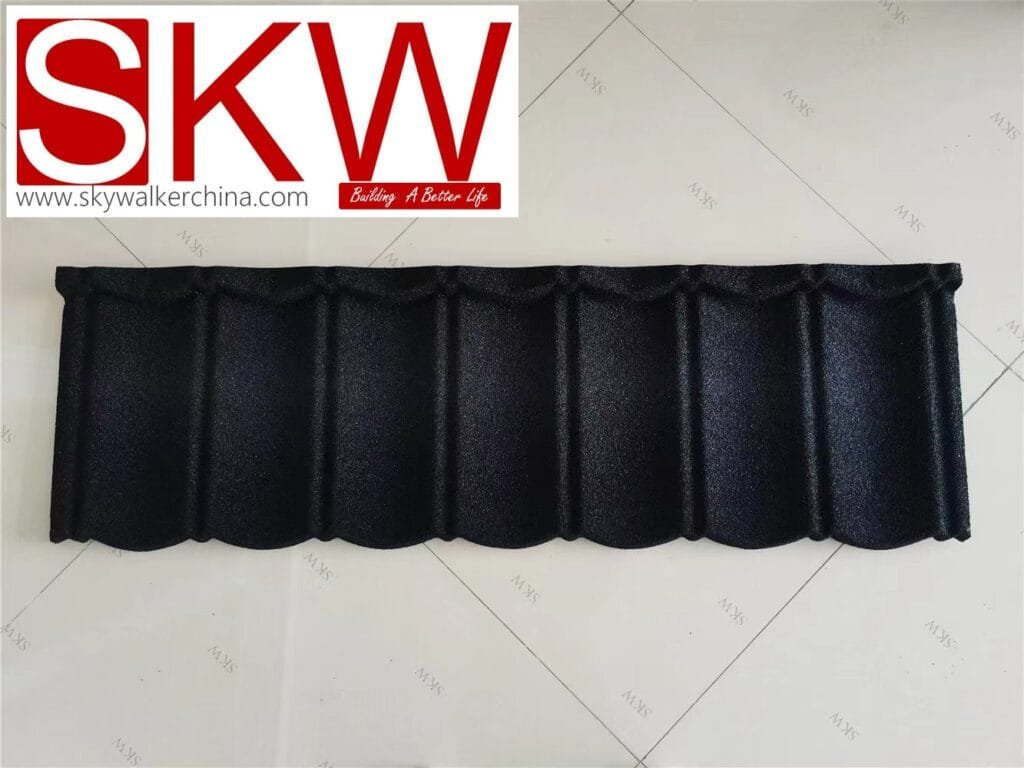
Stone-coated metal roofing has become a top choice for modern residential and commercial buildings worldwide. Thanks to its exceptional durability, wind resistance, weatherproof performance, and elegant stone-grain appearance, it outperforms traditional asphalt and clay tiles in both service life and cost-effectiveness. However, excellent roofing performance relies heavily on standard installation. Most premature roof leaks, rusting, tile displacement, and wind damage are not caused by defective materials, but by avoidable construction mistakes.
Even experienced roofers can overlook subtle installation details. In this blog, we’ll break down the 8 most common stone-coated metal roof installation errors in actual projects, explain their hidden risks, and share practical, professional solutions to help you avoid rework, extra costs, and long-term roof troubles.
1. Improper Underlayment & Overlap Installation
Many construction teams underestimate the importance of the roof underlayment, treating it as a trivial auxiliary layer. In fact, poor underlayment installation is the No.1 cause of roof leakage in stone-coated metal roof projects. Common mistakes include using low-quality underlayment, insufficient overlap width, and wrinkled or loose laying.
When the underlayment overlap is too narrow or uneven, rainwater can seep through the gaps along the roof slope. Loose underlayment will tear under long-term wind and thermal expansion, losing its waterproof function completely.
✅ Professional Fix
Use manufacturer-recommended high-temperature and tear-resistant synthetic underlayment. Keep the horizontal overlap at least 15cm and vertical overlap at least 20cm. Lay the underlayment flat and tight without wrinkles, and fix it evenly to avoid sagging.
2. Incorrect Fastening (Screw Over-Tightening / Under-Tightening)
Fastening is the core of roof stability, yet screw installation errors are extremely prevalent. Two extreme mistakes often occur: insufficient screws or loose fastening, and over-tightening screws.
Too few screws or loose fixation fail to lock the tiles firmly, leading to tile lifting, displacement, or even blow-off under strong winds. Conversely, over-tightening screws will crush the rubber washer, damage the stone-coated surface and metal substrate, causing rust spots and tiny water seepage holes over time.
✅ Professional Fix
Follow the standard fastening rule:4 screws per standard tile, and 6 screws per tile for steep slopes (over 60°) or high-wind areas. Place screws precisely at the arc transition points of the tile front edge. Fasten screws moderately—firm enough to fix the tile without compressing the washer flat.
3. Unlocked Interlocking Seams & Misaligned Tiles
Stone-coated metal tiles adopt a mechanical interlocking design to resist wind and rain. However, many installers skip full seam locking for construction speed, resulting in loosely connected tiles. Meanwhile, irregular tile spacing and vertical straight seam alignment are common visual and functional errors.
Unlocked interlocks greatly reduce wind uplift resistance. Gaps between seams allow driving rain to penetrate easily. Aligned vertical seams will form a straight water flow channel, making the roof prone to concentrated leakage during heavy rains.
✅ Professional Fix
Install tiles in a staggered joint pattern strictly. Fully engage every interlocking seam by pressing tiles tightly into place. Keep the horizontal ridge spacing at a standard 36.5cm to ensure perfect tile fitting. Check all seams row by row during installation to eliminate gaps.
4. Neglecting Cut Edge Treatment & Capillary Water Prevention
On-site cutting is inevitable for fitting valleys, ridges, and wall junctions, but most workers ignore cut edge protection. Bare metal cut edges lose stone coating protection and are vulnerable to rust. Worse, unprocessed valley cuts cause capillary water draw, a hidden leakage problem easily overlooked.
Simply applying sealant on cut edges is only a temporary solution. Without a weather-stop lip, wind-driven rain will creep under the tiles via capillary action, causing hidden water accumulation and long-term roof decay.
✅ Professional Fix
Bend a 20mm upward weather-stop lip for all valley cut tiles to block capillary water. Cover all exposed cut edges with manufacturer-approved touch-up paint for anti-rust protection. Seal all processed edges with dedicated roof sealant for double protection.
5. Substandard Ridge & Hip Cap Installation
Ridges and hips are the weakest waterproof parts of the roof. Common mistakes include mismatched accessories, incorrect overlapping directions, incomplete sealing, and unstable support structures. Many leaks occur precisely at these edge and joint positions.
Unfixed ridge caps will shake and loosen under wind load. Poor overlapping and missing sealant leave obvious gaps for rainwater to invade into the roof structure.
✅ Professional Fix
Use matching original manufacturer accessories for ridge and hip caps to ensure compatibility. Install caps with standard overlapping direction following the roof water flow line. Fix caps with professional support structures and fasteners, and seal all joints completely with dedicated weather-resistant sealant.
6. Improper Flashing Installation Around Penetrations
Roof penetrations such as chimneys, vents, skylights, and side walls are high-risk leakage areas. Common errors include rigid flashing fixation, insufficient overlap, and untreated expansion gaps.
Metal roofs expand and contract with temperature changes. Rigidly fixed flashing cannot adapt to thermal deformation, leading to cracking or detachment. Gaps between flashing and tiles/walls become permanent water seepage points.
✅ Professional Fix
Reserve flexible gaps for flashing installation to adapt to metal thermal expansion and contraction. Ensure flashing overlaps the tiles and wall surfaces sufficiently. Apply waterproof sealant uniformly at all joints and corners to block water penetration paths.
7. Surface Scratches & On-Site Mishandling
Stone-coated metal tiles have a textured stone coating that is easily scratched during transportation and construction. Unprotected scratches expose the internal metal substrate, triggering early oxidation and rust, which shortens the roof service life and ruins the overall aesthetic.
Walking randomly on laid tiles, stacking heavy objects, and unprotected cutting are the main causes of surface damage.
✅ Professional Fix
Handle tiles gently during unloading and installation. Avoid walking directly on the tile surface or placing heavy loads. Repair any accidental scratches immediately with matching touch-up paint to restore the anti-rust and weatherproof layer.
8. Ignoring Roof Pitch Requirements
Each stone-coated metal tile system has a strict minimum roof pitch requirement. Many contractors ignore this rule and install tiles on overly flat slopes, leading to poor water drainage and accumulated rainwater.
Standing water on the roof accelerates coating aging, metal corrosion, and seam leakage, greatly reducing the roof’s wind and weather resistance.
✅ Professional Fix
Check the manufacturer’s pitch standard before construction. Do not install stone-coated metal tiles on slopes below the minimum required angle. For low-slope roofs, strengthen underlayment waterproofing and increase overlap width to ensure smooth water drainage.
Reflexiones finales
Stone-coated metal roofing is a high-performance roofing system, but its service life and waterproof effect depend entirely on standardized installation. Most roof failures are caused by trivial construction mistakes rather than material defects.
By avoiding the above 8 common errors and following professional installation specifications, you can maximize the roof’s wind resistance, waterproof performance, and durability, saving huge costs on later maintenance and rework. Always prioritize standard construction, detail control, and experienced installation teams for your roofing project!