
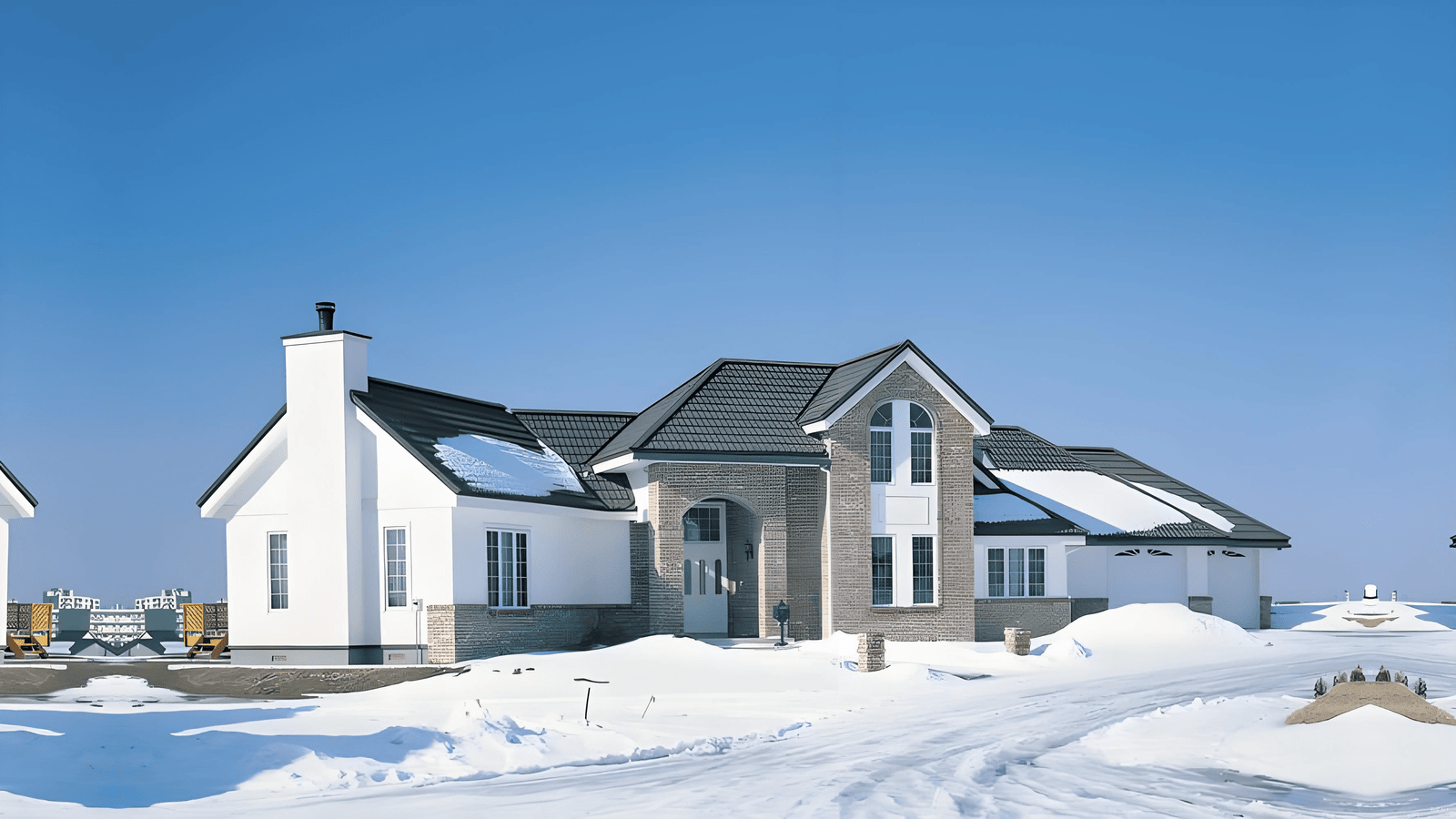
Choosing the right roofing material is one of the most critical decisions for residential and commercial construction. Your roof determines building safety, weather resistance, energy efficiency, curb appeal, and long-term renovation costs. Among the most popular mainstream roofing options today, 石材涂层金属瓦 和 沥青瓦 stand out for their lightweight design, versatile styles, and wide adaptability.
However, these two materials differ drastically in service life, weather resistance, fire safety, maintenance needs, and long-term value. Many property owners and contractors struggle to pick between budget-friendly asphalt shingles and premium stone coated metal tiles. In this detailed guide, we will break down their core differences, pros and cons, and ideal application scenarios to help you make a cost-effective, future-proof roofing choice in 2026.
1. Core Material & Structural Differences
The fundamental gap between the two roofing materials lies in their base materials and surface craftsmanship, which directly determines their overall performance and durability.
沥青瓦
Asphalt shingles, also known as architectural shingles, are made of fiberglass or organic mat saturated and coated with modified asphalt, with mineral granules pressed onto the surface for UV protection and decoration. As a traditional organic roofing material, it features soft texture, lightweight structure, and simple production technology, making it a mainstream economical roofing choice for decades.
Stone Coated Metal Tiles
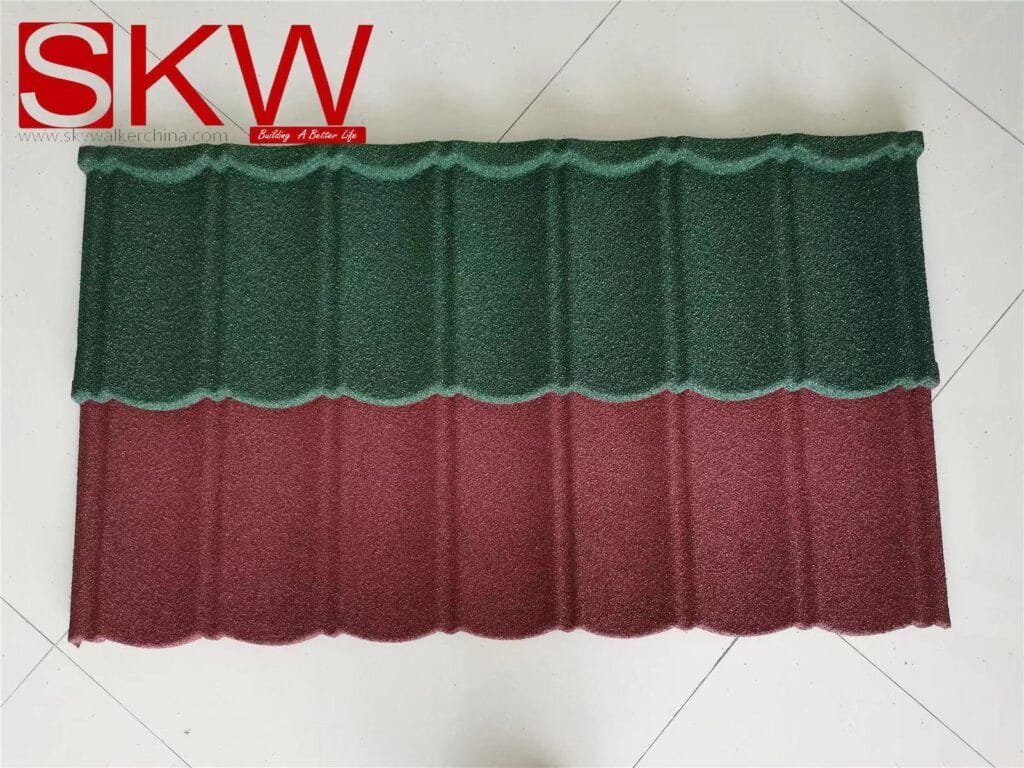
Stone coated metal tiles adopt a high-strength aluminum-zinc alloy steel sheet as the base layer, with multi-layer protective coatings and natural colored stone sand sintered on the surface. The composite structure combines the toughness of metal materials and the decorative texture of natural stone. The anti-corrosive aluminum-zinc substrate effectively avoids rust and oxidation, while the sintered stone sand layer delivers excellent weather resistance and aesthetic performance.
2. Service Life & Durability
Service life is the biggest decisive factor for long-term roofing cost performance, and the two products show a huge gap here.
Asphalt shingles have a relatively short lifespan. Under normal climatic conditions, their service life is only 8–15 years. Exposed to long-term ultraviolet radiation, high-temperature baking in summer and freezing in winter, asphalt materials will gradually age, harden, become brittle, and develop cracks, curling edges, and granule shedding. In coastal, high-temperature or severe cold areas, the aging speed accelerates significantly, requiring partial repairs or overall replacement in advance.
Stone coated metal tiles feature ultra-long durability. Thanks to the anti-corrosive aluminum-zinc steel base and high-temperature sintered stone sand coating, they resist UV aging, oxidation and corrosion effectively. Their standard service life reaches 30–50 years, and high-quality products can maintain intact performance and uniform color for more than 50 years. They basically eliminate the need for overall roof replacement within the building’s service cycle.
3. Weather Resistance & Structural Safety
Roofs need to withstand extreme weather such as strong winds, heavy rain, hail, high temperature and blizzards all year round. The weather resistance gap between the two materials is very obvious.
Wind & Rain Resistance
Asphalt shingles have moderate wind resistance. Ordinary asphalt shingles are prone to being blown up or peeled off in strong winds above level 8–10, especially after aging and shrinkage. Their waterproof performance relies heavily on auxiliary waterproof membranes and adhesive layers. Once the edges curl or granules fall off, roof leakage is highly likely to occur.
Stone coated metal tiles adopt an interlocking buckle installation structure, which forms an integral whole after laying. They can resist level 12 typhoons and strong gusts without displacement or peeling. The compact stone sand surface and seamless splicing design provide excellent drainage and waterproof performance, effectively avoiding rainwater penetration even in continuous heavy rain.
Temperature & Hail Resistance
Asphalt shingles are sensitive to temperature changes. In high-temperature summer environments, asphalt softens and deforms, and is prone to blistering and mildew; in severe cold winters, the material becomes brittle and cracks easily under frost expansion and hail impact.
Stone coated metal tiles have stable physical properties in the temperature range of -40℃ to 80℃, no deformation, no cracking, and no fading. The surface stone sand layer can buffer hail impact, providing outstanding hail and frost resistance, suitable for all climate zones worldwide.
4. Fire Safety Performance
Fire rating is a key safety indicator for building roofing materials.
Asphalt shingles are combustible materials, generally rated Class B or C fire resistance. The asphalt base is flammable and will burn and melt when encountering open fire, unable to resist external fire spread, with potential fire hazards.
Stone coated metal tiles are non-combustible Class A fireproof materials. The metal base and inorganic stone sand coating do not burn or produce toxic smoke in case of fire, effectively blocking fire spread and improving the overall fire safety level of the building.
5. Aesthetics & Color Stability
Both materials have diverse styles, but their long-term aesthetic retention differs greatly.
Asphalt shingles have rich initial colors and diverse tile shapes, suitable for simple modern and villa-style buildings. However, after 3–5 years of outdoor exposure, the surface mineral granules will fall off, and the color will fade and turn yellow unevenly, making the roof look old and mottled, seriously affecting the building’s appearance.
Stone coated metal tiles simulate the texture of traditional clay tiles and wooden shingles, with natural and layered stone sand texture. The high-temperature sintered color fixing process ensures no fading, no discoloration and no powder falling for decades. Multiple colors and shapes (rectangle, diamond, fish scale) are available, compatible with European, American, modern and rural architectural styles, maintaining a neat and beautiful roof appearance for a long time.
6. Installation & Structural Load
Both roofing materials belong to lightweight types, with low requirements for roof load-bearing structures, applicable to new buildings and old roof renovations.
Asphalt shingles are ultra-light, easy to cut and construct, with fast installation speed and low construction difficulty, suitable for various slope roofs. However, the construction quality is highly dependent on workers’ experience. Improper bonding and lap joints will lead to water leakage risks in the later stage.
Stone coated metal tiles are also lightweight, with a single-piece coverage area larger than asphalt shingles, featuring standardized and modular installation. The interlocking buckle design reduces human construction errors, with higher overall flatness and construction efficiency. The overall load-bearing pressure on the building is low, and no additional structural reinforcement is required for most old roof renovation projects.
7. Maintenance Cost & Long-Term Value
Many people only focus on initial installation costs while ignoring long-term maintenance expenses, which leads to higher comprehensive costs in the later stage.
Asphalt shingles require high daily maintenance. After strong winds, hail and rainstorms, regular inspection and repair of curled, cracked and missing tiles are needed. It is also necessary to clean roof debris regularly to avoid moss growth and drainage blockage. Basically, partial maintenance is required every 2–3 years, and overall replacement is needed within 15 years, resulting in continuous hidden costs.
Stone coated metal tiles have almost zero maintenance costs. The anti-corrosion and anti-aging structure will not crack, peel or fade in long-term use. Only simple daily cleaning is needed, with no special repair and maintenance work required. Its ultra-long service life avoids repeated roof replacement, greatly reducing the long-term comprehensive cost of the building.
8. Environmental Sustainability
In terms of environmental protection, stone coated metal tiles have obvious advantages. Asphalt shingles are difficult to degrade and recycle after being scrapped, and most waste materials can only be buried in landfills, causing long-term environmental pressure.
Stone coated metal tiles are made of recyclable metal substrates and natural inorganic stone sand, with no harmful substances released during production and use. The discarded metal tiles can be completely recycled and reused, conforming to green and low-carbon building standards, with higher environmental value.
9. Direct Pros & Cons Summary
沥青瓦
优点: Low initial cost, ultra-light weight, flexible construction, rich initial styles, suitable for short-term use and low-budget projects.
缺点: Short service life, easy aging and fading, poor wind and hail resistance, flammable, high later maintenance frequency and high comprehensive long-term cost.
Stone Coated Metal Tiles
优点: 30–50 years long service life, Class A fireproof, extreme weather resistant, stable color and beautiful appearance, zero later maintenance, recyclable and eco-friendly, high long-term cost performance.
缺点: Higher initial installation cost than asphalt shingles, slightly higher technical requirements for standardized installation.
10. How to Choose the Right Roofing Material?
Choose Asphalt Shingles If: You have a limited construction budget, the building is for short-term use (10–15 years), you pursue fast construction speed, and the project is located in a mild climate area with no extreme weather such as strong winds and hail.
Choose Stone Coated Metal Tiles If: You need a long-term durable roof, pursue high building appearance grade, the project is located in coastal, high-temperature, severe cold or extreme weather areas, and you want to save later maintenance and replacement costs to realize one-time roofing investment and long-term use.
Final Verdict
Asphalt shingles are a typical budget-friendly short-term roofing solution, suitable for temporary buildings and low-budget renovation projects. However, their poor durability, frequent maintenance and short service life make their long-term comprehensive cost far higher than the initial price.
Stone coated metal tiles, as a new generation of high-performance roofing materials, balance lightweight installation, beautiful decoration, extreme weather resistance and ultra-long service life. Although the initial investment is higher, the zero-maintenance and long-life advantages make it the most cost-effective choice for permanent residential buildings, villas, scenic buildings and high-quality commercial projects.
常见问题
Q1: Are stone coated metal tiles noisy in rainy days? A: No. The surface stone sand layer can absorb rainwater impact noise, with better mute effect than ordinary metal roofs, even quieter than aging asphalt shingles.
Q2: Can stone coated metal tiles be laid on old asphalt roofs? A: Yes. They can be directly laid on the original old roof substrate without removing the old tiles, saving construction time and garbage disposal costs.
Q3: Do asphalt shingles fade seriously? A: Yes. Most asphalt shingles will fade, shed granules and age obviously within 3–5 years, affecting the overall beauty of the roof.