Living or building along the coast comes with stunning ocean views — and unforgiving weather conditions. Salt-laden spray, persistent high humidity, intense UV rays, and powerful hurricane or typhoon winds can ruin a regular roof in just a few years. Homeowners, resort developers, and coastal contractors all ask the same question: what is the ideal roofing material for coastal buildings?
Not all roofing products perform equally in marine climates. Asphalt shingles, ordinary galvanized steel, and even some clay tiles quickly show damage when exposed to constant salt exposure. If you are planning new construction or a roof replacement for beach houses, villas, resorts, or waterfront commercial buildings, this guide will break down coastal roofing challenges, compare common options, and explain why stone coated metal roofing has become a top choice for coastal projects worldwide.
What Makes Coastal Roofing So Challenging?
Before picking a roof, it helps to understand the three biggest threats on the coastline:
- Corrosion par brouillard salin: Tiny chloride particles carried by sea wind stick to roof surfaces. They break down coatings, trigger rust, and eat away at metal fasteners and flashing. Ordinary galvanized steel will rust rapidly within 1,500 feet of the shoreline.
- Extreme wind and storm uplift: Coastal zones often face tropical storms and hurricanes. Weak roofing systems peel off, crack, or blow away entirely under high wind pressure.
- Heavy UV radiation and high humidity: Strong sunlight fades colors and degrades organic materials. Constant moisture encourages mold, algae, and hidden decay under the roof covering.
A true coastal-grade roof must resist all three threats at the same time.
A Quick Look at Common Coastal Roofing Options
Bardeaux d'asphalte
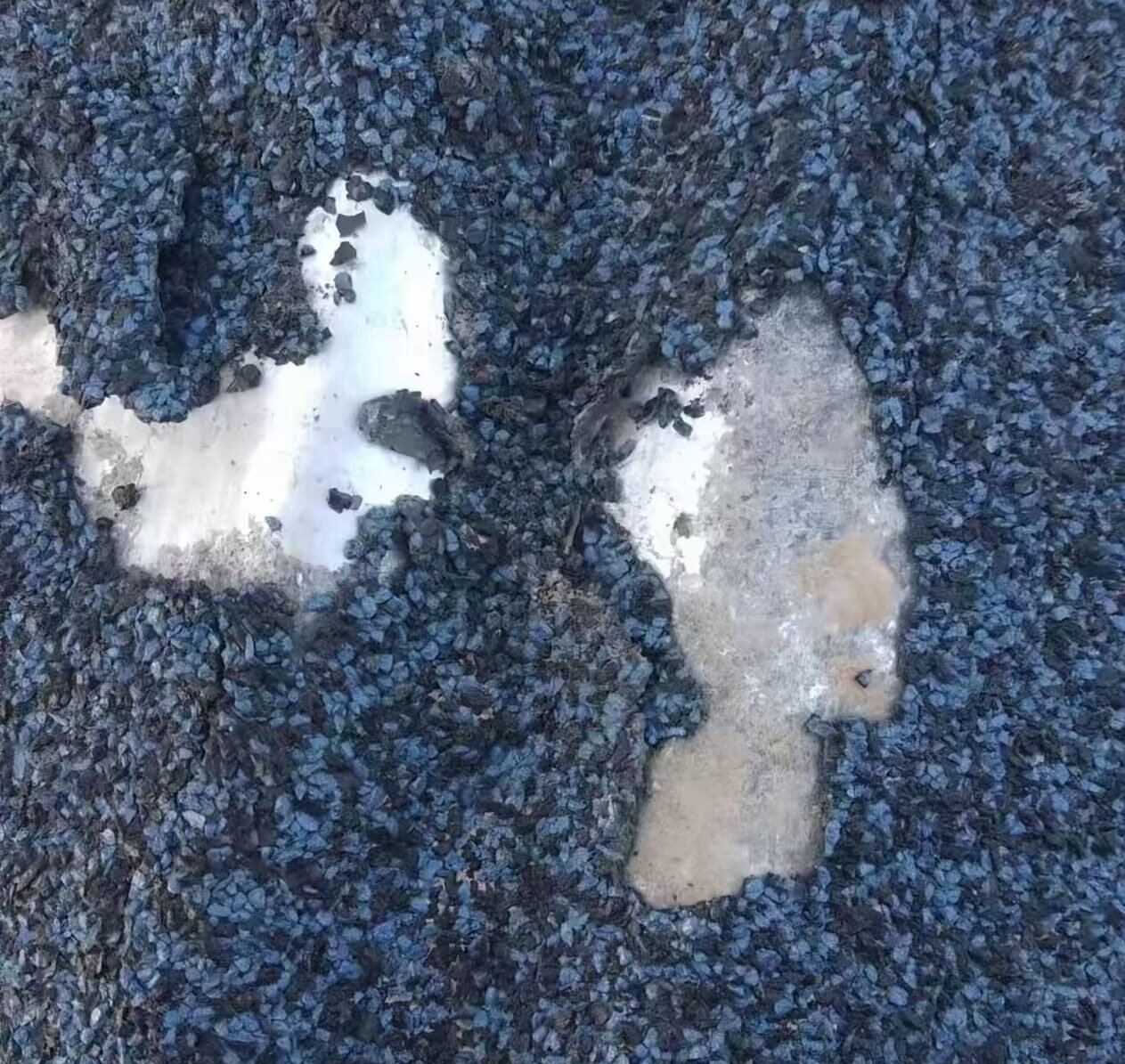
Asphalt shingles are cheap and widely used inland, but they are a poor long-term pick for the coast. Salt air accelerates granule loss, UV damage, and curling. Most only last 10–15 years near the ocean, with frequent repairs and early replacement needed.
Clay & Concrete Tiles
Clay tiles are naturally salt-resistant and can last for decades. They have classic curb appeal and good heat resistance. However, there are clear downsides: they are extremely heavy, requiring expensive structural reinforcement. In strong storms, loose clay tiles crack, chip, or fly off. They also cost more to ship and install.
Bare Standing-Seam Metal
Marine-grade aluminum standing seam panels work well for coastal locations, with excellent rust resistance. Still, bare metal creates loud rain noise, limited color choices, and higher installed pricing for residential villa aesthetics. Standard Galvalume panels without extra protection may still degrade faster right on the beachfront.
Tuiles en métal revêtues de pierre
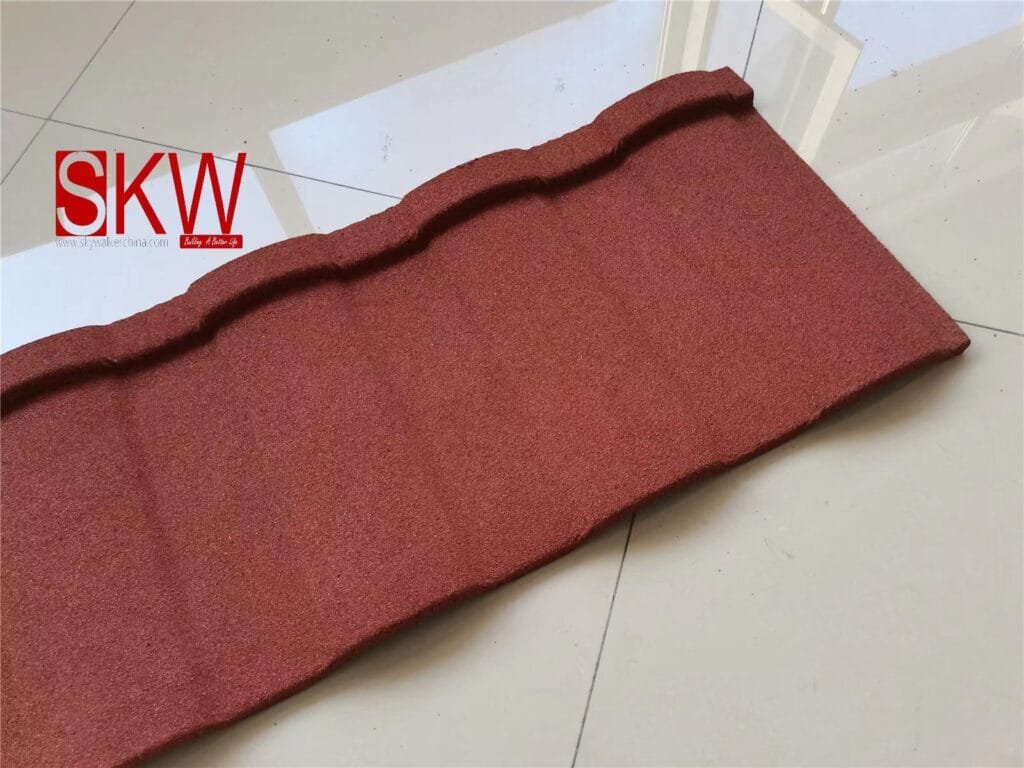
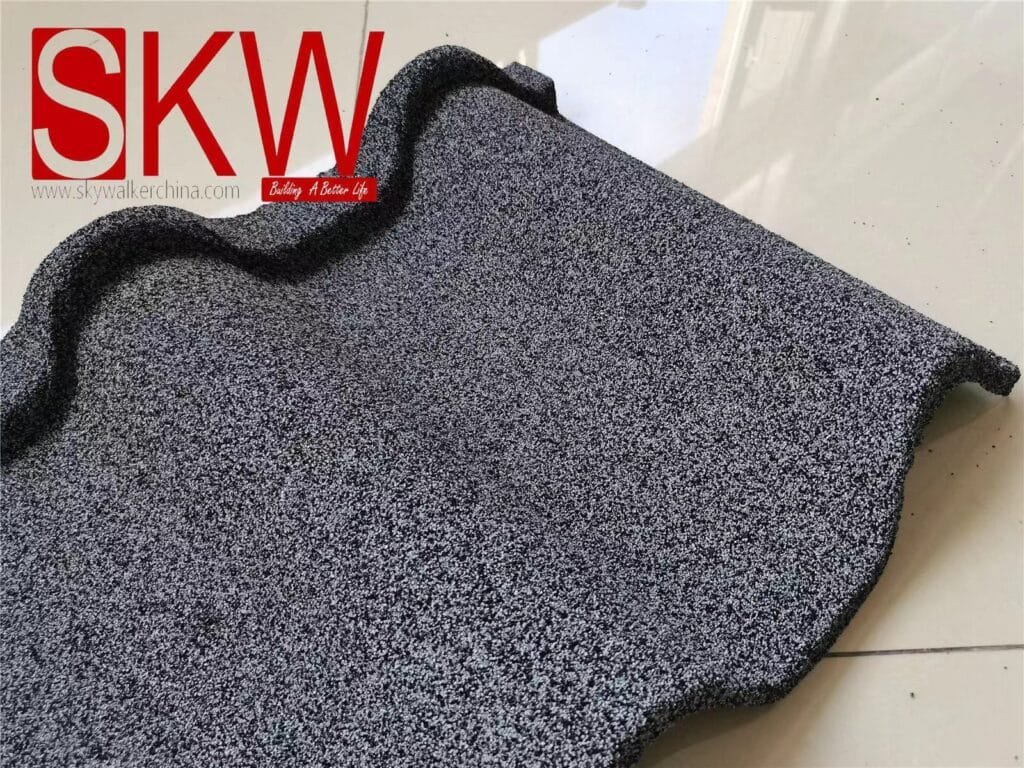
Stone coated metal roofing combines the anti-corrosion strength of Galvalume (Alu-Zinc alloy steel substrate) with a hard, bonded layer of natural stone granules. This balanced design solves most coastal pain points and is fast becoming the preferred solution for seaside homes and resorts across Southeast Asia, Africa, Caribbean, and Pacific island markets.
Why Stone Coated Metal Roof Is Ideal for Coastal Buildings
✅ Superior Salt Spray & Corrosion Resistance The Galvalume steel core uses 55% aluminum and 43.5% zinc alloy protection. Aluminum creates a stable oxide barrier against moisture and salt; zinc offers sacrificial protection at scratches and cut edges. Qualified stone coated metal tiles pass long ASTM B117 salt spray testing, holding up reliably under continuous marine exposure without red rustLinyi Geel…. The sealed stone granule top layer adds an extra shield between salt fog and the metal base.
✅ High Wind & Hurricane Resistance Interlocking tile profiles and secure fastening systems deliver strong wind uplift performance, rated up to 160 mph for premium grades. Unlike clay tiles that blow apart, stone coated metal tiles lock together tightly. It meets requirements for many hurricane-prone coastal zones when installed with matching marine-grade accessories and fasteners.
✅ Lightweight, Friendly for New Builds & Retrofits One huge advantage over clay or concrete tile is weight. Stone coated metal tiles are much lighter, so most existing roof frames do not need costly structural upgrades during re-roofing. This makes it perfect for coastal old-house renovation projects and resort renovation budgets.
✅ UV Stable, Color Retention & Low Maintenance Natural stone granules do not fade easily under strong coastal sunlight. You get rich, consistent colors to match villa, beach bungalow, and resort styles — from classic terracotta, charcoal, brown to modern grey tones. There is no need for regular repainting. Simple annual rinsing is enough to wash off accumulated salt dust.
✅ Quiet During Rain & Hail Resistant The stone granule layer absorbs rain impact noise, solving the noisy problem common with bare metal roofs. It also provides good impact resistance against hail and flying debris during coastal storms.
✅ Fire Resistant & Energy Efficient Most stone coated metal roofing achieves Class A fire rating. The metal substrate reflects solar heat, helping reduce attic temperature and cutting air conditioning costs for hot seaside properties.
Critical Installation Tips for Coastal Roof Success
Even the best coastal roof material can fail with poor installation. Follow these rules:
- Always use 316 stainless steel or marine-grade fasteners, never standard nails or screws.
- Select compatible anti-corrosion flashing, ridge caps, valley accessories from the same system.
- Keep proper roof slope and ventilation to avoid trapped moisture.
- Schedule light roof cleaning once per year to remove built-up salt deposits.
- Ask suppliers for salt spray test reports and coastal warranty terms before bulk purchase.
Final Verdict
Clay tiles and marine aluminum panels have their place, but stone coated metal roofing strikes the sweet spot: excellent salt corrosion resistance, hurricane-grade wind performance, light weight, attractive tile-style appearance, reasonable long-term cost, and minimal maintenance.
For coastal homeowners, builders and importers looking for a durable, beautiful roofing solution that can survive decades of ocean air and storms — stone coated metal roof tiles are the ideal roofing material for coastal buildings.