
Stone Coated Metal Roof for Commercial & Industrial Buildings: The Complete 2026 Guide
When warehouse owners in Queensland, factory managers in South Africa, or commercial developers in Southeast Asia need a roofing solution that survives decades of industrial punishment — cubierta metálica revestida de piedra is rapidly becoming the specification of choice. This guide explains why, with hard numbers on performance, cost, and ROI that procurement teams and building owners can take straight to a budget meeting.
1. Why Commercial & Industrial Buildings Demand More From Roofing
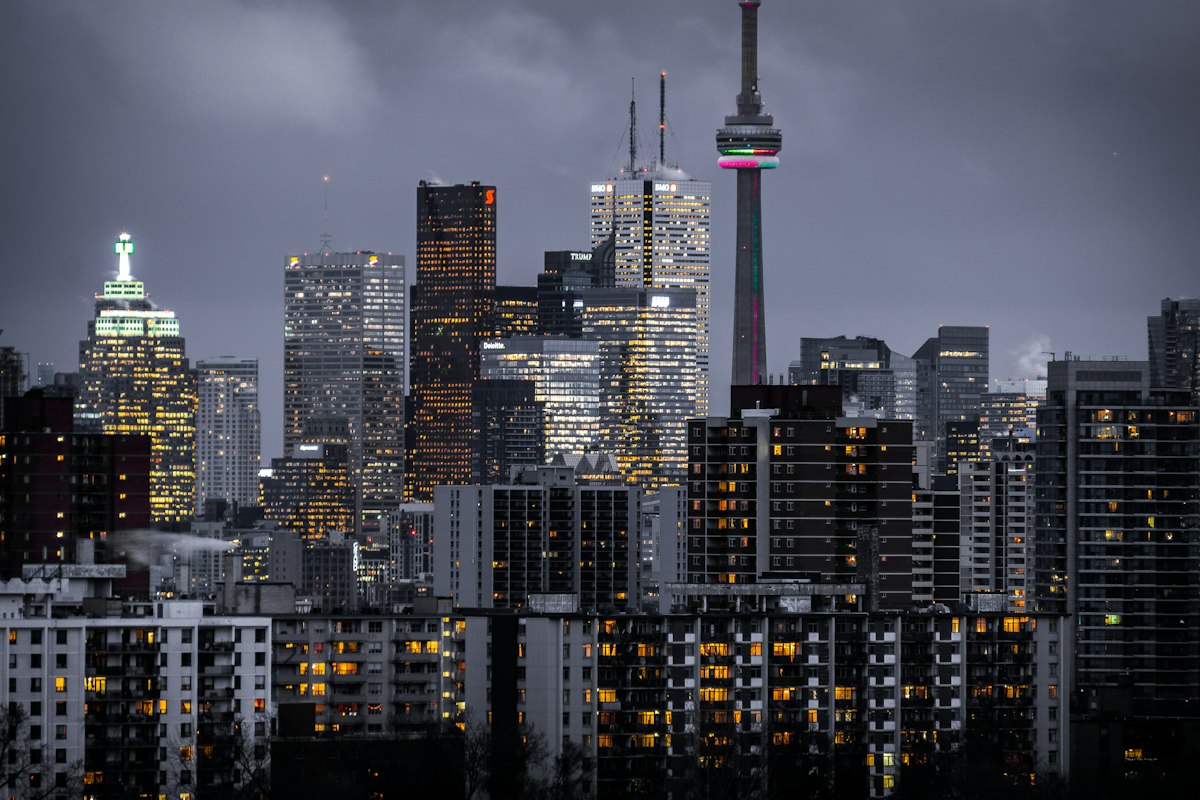
Commercial and industrial facilities impose extreme demands on roofing systems that residential products simply aren’t engineered to handle:
- Large-span roof areas — warehouses, factories, and distribution centers often cover 2,000–50,000 m², meaning material cost and long-term maintenance are multiplied at scale
- 24/7 operational continuity — any roof failure causes production shutdown, inventory damage, and liability exposure
- Thermal cycling stress — metal roofs over industrial spaces experience extreme temperature swings from interior heat production
- Chemical and pollutant exposure — factories, processing plants, and ports expose roofing to industrial chemicals, exhaust fumes, and acid rain
- Heavy foot traffic — maintenance personnel regularly access rooftops for HVAC, solar, and equipment servicing
- Insurance and compliance requirements — commercial projects require documented fire ratings, wind ratings, and load certifications
Traditional commercial roofing solutions — standing seam metal, built-up roofing (BUR), EPDM membrane, or corrugated steel — each solve some of these problems but introduce others. Stone coated metal roofing addresses the full matrix.
2. Technical Performance: Stone Coated Metal vs. Conventional Commercial Roofing
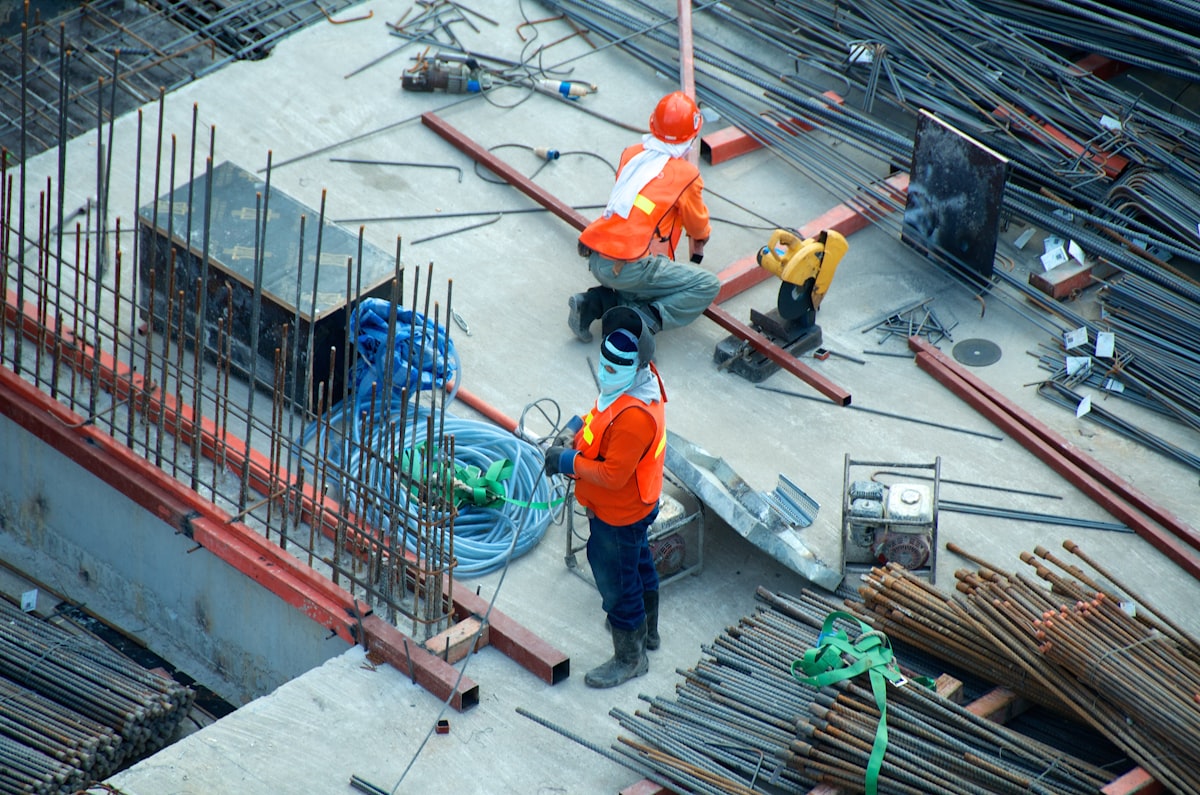
Let’s compare the key performance metrics that matter to commercial procurement and engineering teams:
| Factor de rendimiento | Stone Coated Metal (SKW) | Standing Seam Metal | EPDM Membrane | Corrugated Steel |
|---|---|---|---|---|
| Vida útil | Más de 50 años | 40–60 years | 20-30 años | 15-25 años |
| Resistencia al viento | ≥220 km/h (AS 4055) | ≥200 km/h | Seam failure risk | Prone to uplift |
| Clasificación al fuego | Class A (UL 790) | Clase A | Class B/C | Unrated/Class C |
| Hail Resistance | Class 4 (UL 2218) | Class 3–4 | Class 1–2 | Dents, deforms |
| Foot Traffic | Excellent (stone surface) | Moderado | Poor (puncture risk) | Poor (dent/scratch) |
| Noise Insulation | Excellent (stone dampens) | Poor (rain loud) | Good | Very poor |
| Thermal Reflectivity | High (cool roof option) | Medium–High | Medio | Low–Medium |
| Resistencia a la corrosión | AZ150+ (5-layer system) | AZ150+ | Excelente | Poor without coating |
| Estética | Premium (tile profile) | Industrial | Flat/utilitarian | Industrial |
The standout differentiator for commercial applications is the stone surface layer. Unlike bare metal alternatives, the acrylic-bonded stone chips on SKW panels dramatically reduce rain noise (critical for office buildings and food processing facilities), improve foot traffic durability, and provide the aesthetics required for mixed-use commercial developments.
3. Key Commercial Application Categories
3.1 Logistics & Distribution Centers
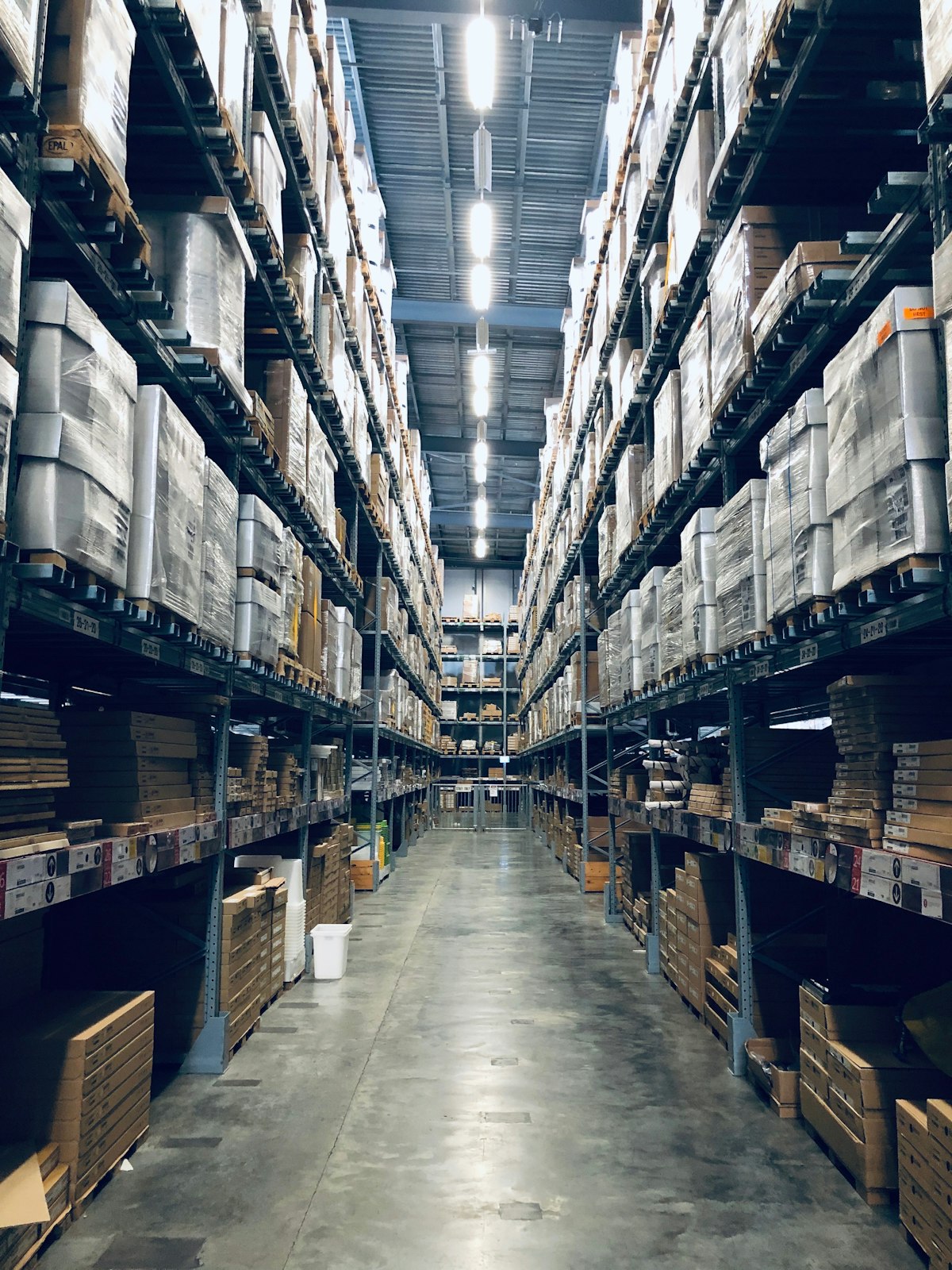
Logistics warehouses represent one of the highest-growth commercial roofing segments globally, driven by e-commerce expansion. Key requirements include:
- Span capability — SKW panels work with standard purlin systems across 15–30m spans without structural modification
- Solar compatibility — logistics centers are prime candidates for rooftop solar; stone coated metal provides a certified mounting substrate
- Insurance premium reduction — Class A fire rating and Class 4 hail rating can reduce commercial property insurance by 15–30%
- Minimal maintenance downtime — the 50-year lifespan and self-cleaning surface eliminate re-roofing interruptions to operations
3.2 Manufacturing & Industrial Facilities
Factories and processing plants present the most demanding environment for any roofing product. Considerations unique to industrial settings:
- Chemical resistance — the 5-layer protection system (Galvalume AZ150+ base → chromate conversion → primer → polyester topcoat → stone chips → acrylic overglaze) creates a chemical-resistant barrier
- Condensation management — high interior humidity in food processing, textile, and chemical plants requires roofing that doesn’t accelerate internal corrosion
- Noise reduction — manufacturing floor noise requirements often necessitate acoustic damping from the roof; corrugated metal amplifies rain noise into facilities
- Structural load — at 3.2–3.8 kg/m², SKW tiles add minimal dead load compared to concrete/clay tile alternatives
3.3 Commercial Retail & Mixed-Use Developments
Shopping centers, strip malls, and mixed-use commercial/residential buildings increasingly specify stone coated metal for its architectural versatility:
- Low-slope compatibility — SKW profiles work on roof pitches from 2.5:12 to 12:12, covering flat-to-steep commercial roof geometries
- Façade integration — tile profiles match surrounding residential-scale architecture in mixed-use zones
- Tenant noise comfort — stone chip acoustic damping is a documented selling point for retail tenants in high-rainfall markets
3.4 Agricultural & Rural Industrial Buildings
Farm sheds, grain storage, livestock facilities, and rural processing plants represent a massive underserved market in Australia, South Africa, New Zealand, and parts of Southeast Asia:
- Corrosion from animal waste — ammonia-heavy environments accelerate conventional steel roof degradation; stone coated metal’s sealed surface resists ammonia attack
- Remote installation — lightweight panels (3.2 kg/m²) reduce freight costs to remote sites and simplify installation without heavy lifting equipment
- Fire risk management — rural fire risk is high; Class A-rated stone coated metal reduces ember attack risk compared to combustible roofing
3.5 Hospitality & Resort Facilities
Hotels, resorts, and entertainment venues require roofing that combines architectural appeal with long-term performance:
- Aesthetic range — available in tile, shake, and shingle profiles across 8+ color options to match architectural specifications
- Coastal durability — resort properties are disproportionately located in coastal zones; salt spray resistance is non-negotiable
- Long-term ROI — hospitality assets are valued over 30–50 year horizons, making the 50-year roof warranty financially compelling
4. Target Markets: Regional Commercial Construction Landscape
| Mercado | Commercial Roofing Growth Driver | Key Standard | SKW Competitive Angle |
|---|---|---|---|
| 🇦🇺 Australia | Warehouse/logistics boom (e-commerce), BAL fire zone compliance | AS 4055, NCC BAL-40 | 40–50% cost below DECRA, BAL-rated options |
| 🇿🇦 South Africa | Industrial parks, agri-processing, retail expansion in Gauteng/Western Cape | SANS 10400, SABS | Corrosion resistance for coastal/mining regions, ZAR-competitive pricing |
| 🇺🇸 USA (Sun Belt) | Industrial reshoring, data centers, cold storage expansion in TX/FL/AZ | UL 790, FM 4471, ASCE 7-22 | Insurance-grade ratings, solar-ready substrate |
| 🇸🇬🇲🇾 Southeast Asia | Manufacturing FDI influx (Vietnam, Malaysia, Thailand), industrial zones | MS 1064 (Malaysia), regional adaptation | Tropical humidity & high wind resistance, acoustic advantage |
| 🇳🇿 New Zealand | Earthquake-resilient commercial rebuilds, agri-tourism facilities | NZS 3604, E2 weathertight | Lightweight (seismic benefit), 50-year durability |
5. Cost Analysis: Total Cost of Ownership for Commercial Projects
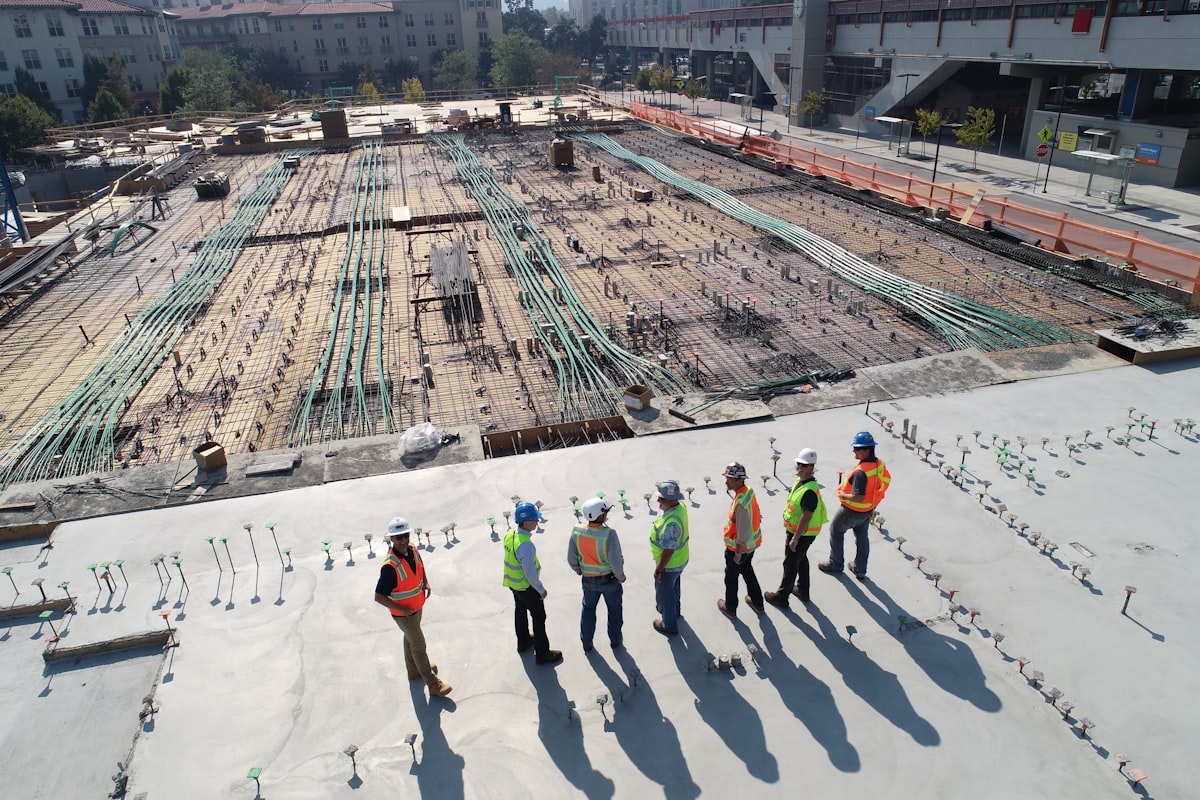
For commercial decision-makers, Total Cost of Ownership (TCO) over a 30-year building lifecycle is the operative metric — not just installed cost.
| Cost Component (per 1,000 m²) | Stone Coated Metal (SKW) | Corrugated Steel | EPDM Membrane | Standing Seam Metal |
|---|---|---|---|---|
| Initial Install Cost | USD $28,000–$42,000 | USD $12,000–$18,000 | USD $20,000–$30,000 | USD $35,000–$55,000 |
| Maintenance (30 yr) | USD $2,000–$4,000 | USD $18,000–$25,000 | USD $12,000–$18,000 | USD $3,000–$6,000 |
| Replacement Cost | None (50+ yr) | USD $18,000 (year 20) | USD $25,000 (year 25) | None (40+ yr) |
| Insurance Savings (30 yr) | USD $15,000–$25,000 | Ninguno | USD $5,000–$8,000 | USD $15,000–$22,000 |
| Energy Savings (30 yr) | USD $18,000–$30,000 | USD $3,000–$6,000 | USD $8,000–$12,000 | USD $15,000–$25,000 |
| 30-Year TCO (Net) | ~USD $15,000–$25,000 | ~USD $43,000–$55,000 | ~USD $44,000–$56,000 | ~USD $23,000–$38,000 |
6. Technical Specifications for Commercial Projects
SKW stone coated metal panels are engineered to meet or exceed the specifications required for commercial building permits across global markets:
| Especificación | SKW Commercial Grade Value | Relevant Standard |
|---|---|---|
| Base Steel Thickness | 0.40–0.45mm (standard); 0.47mm (heavy commercial) | AS 1397, EN 10346 |
| Galvalume Coating Weight | AZ150 (150 g/m²) minimum; AZ200 available | ASTM A792, AS 1397 |
| Panel Weight | 3.2–3.8 kg/m² | AS 1170.1 structural loads |
| Resistencia al levantamiento por viento | ≥220 km/h (AS 4055 N6); ≥200 mph available | AS 4055, ASCE 7-22, FM 4471 |
| Clasificación al fuego | Class A (UL 790); BAL-40 compliant | UL 790, AS 3959 |
| Hail Impact | Class 4 (2″ steel ball, 90 mph) | UL 2218 Clase 4 |
| Salt Spray Resistance | >2,000 hours (ASTM B117) | ASTM B117, ISO 9227 |
| Minimum Roof Pitch | 2.5:12 (21°) with underlayment | Manufacturer specification |
| Garantía | 50 years product; 30 years coating | Transferable to new owner |
| Available Profiles | Roman Tile (R), Classic Shake (K/S), Flat Shingle (F) | 4 profile families, 8+ colors |
7. Installation Considerations for Large Commercial Spans
Roofing large commercial and industrial buildings differs significantly from residential installation. Project managers and contractors should plan for:
7.1 Structural Engineering Requirements
- Purlin spacing — commercial installations typically use steel C- or Z-purlins at 600–900mm centers; SKW panels are certified across standard commercial purlin configurations
- Ridge and hip detailing — for low-slope commercial applications, self-adhesive SBS modified bitumen underlayment is recommended under all SKW panels
- Expansion joints — metal roofs on commercial buildings over 30m in length require expansion joints to accommodate thermal movement; SKW’s interlocking panel design accommodates 3–5mm per 10m
7.2 Crew Size and Timeline
- Crew productivity — experienced crews install 80–120 m² per person per day; a 5,000 m² warehouse roof typically requires a 10-person crew for 5–7 working days
- Crane and safety equipment — bulk pallet delivery and rooftop material staging require crane access; plan for edge protection and fall restraint systems
- Sequencing with other trades — coordinate with HVAC, electrical conduit, and rooftop solar installation to avoid penetration rework
7.3 Fastening and Waterproofing
- Fastener specification — use only manufacturer-approved Type 316 stainless steel or hot-dip galvanized screws; avoid mixed-metal contact to prevent galvanic corrosion
- Penetration sealing — all pipe, conduit, and HVAC penetrations must be sealed with EPDM pipe boots and polyurethane sealant; this is the most common failure point in large commercial roofs
- Gutter sizing — commercial roof areas generate high water volumes; gutter sizing should follow AS/NZS 3500.3 or SMACNA guidelines based on local rainfall intensity data

8. Real-World Commercial Case Studies
Case Study A: Cold Storage Facility — Western Australia
Proyecto: 8,500 m² cold storage warehouse, Class A food grade
Desafío: Extreme coastal exposure + ammonia refrigerant environment + high food-safety fire standard requirement
Solución: SKW AZ200 commercial grade stone coated panels, BAL-29 compliant, with vapor barrier underlayment
Outcome: Class A fire rating achieved; 22% insurance premium reduction vs. previous corrugated steel; zero maintenance callouts in 4 years post-installation; solar panel array added at Year 2 using factory-installed rail clips
Case Study B: Manufacturing Campus — Gauteng, South Africa
Proyecto: 22,000 m² automotive parts manufacturing campus (3 buildings)
Desafío: Acid rain exposure from nearby industrial zone; 24/7 operations requiring zero interruption; aggressive budget with 20-year horizon
Solución: SKW R-profile (Roman Tile) stone coated panels across all three buildings
Outcome: Zero corrosion failures after 6 years; estimated ZAR 3.4M savings vs. corrugated Chromadek replacement at year 15; building value uplift improved debt-to-asset ratio for refinancing
Case Study C: Agri-Processing Complex — Mekong Delta, Vietnam
Proyecto: Rice processing facility + worker accommodation, combined 6,800 m²
Desafío: Typhoon zone (Cat. 3+), tropical humidity, and noise reduction requirement for worker dormitories adjacent to processing lines
Solución: SKW K-profile (Classic Shake) with heavy underlayment; engineered to Vietnam TCVN 9374 wind loads
Outcome: Survived 2024 Typhoon Yagi with zero panel loss; noise reduction in dormitories measurably improved vs. steel alternatives; project won regional agricultural development award
9. FAQ for Commercial Buyers & Contractors
Can stone coated metal roofing be used on flat commercial roofs?
Stone coated metal panels require a minimum pitch of 2.5:12 (approximately 12°) for water-shedding performance. True flat roofs (<1:12) are not suitable. However, the vast majority of commercial and industrial buildings in warm climates are designed with pitches of 5°–15° — which falls within SKW’s approved installation range. For pitch-critical projects, your distributor can provide engineering documentation confirming compliance.
What load ratings are available for large commercial spans?
SKW commercial grade panels are load-rated to AS 1170.1 structural standards for most Australian commercial applications. For US projects, FM 4471 approval documentation is available for qualifying configurations. Engineering certification for specific purlin-panel configurations can be provided for tender submissions — contact your regional distributor with project specifications.
How does noise performance compare on industrial roofs?
Standard corrugated steel amplifies rain noise to approximately 52–60 dBA inside the building. Stone coated metal panels, due to the mass of the acrylic-bonded stone surface and the air gap in the interlocking profile, reduce this to 38–45 dBA — a reduction that makes a meaningful difference in facilities with noise-sensitive operations or adjacent office/residential areas. Adding a blanket acoustic insulation layer beneath panels achieves best-in-class performance of <35 dBA.
Is special equipment required for large commercial installation?
Unlike standing seam metal that requires on-site roll-forming machinery, SKW panels arrive pre-formed and ready to install. A standard crane or telehandler is sufficient for pallet staging. The main specialized requirement is fall protection — commercial roofing always requires edge protection and personal fall arrest systems per local OH&S regulations.
Can rooftop solar be installed on SKW commercial panels?
Yes — SKW panels are engineered as a solar-compatible substrate. Factory-supplied rail-clip attachment points can be specified at time of manufacture, eliminating field drilling and preserving the weatherproof surface integrity. This is a significant advantage over membrane roofing systems where penetration waterproofing is a persistent maintenance issue. See our dedicated solar integration guide for full technical specifications.
What documentation is available for commercial tender submissions?
SKW distributors can provide: product test certificates (UL 790, UL 2218, ASTM B117), wind uplift engineering calculations, BIM/Revit objects for design coordination, MSDS for all coating components, warranty documentation, and case study references for comparable projects. Contact your regional distributor with the project specification number to receive a compliant technical package.
10. Conclusion: Why Stone Coated Metal Is the Smart Commercial Specification
The commercial roofing decision is fundamentally a financial engineering problem: which product delivers the best risk-adjusted return over the building’s operational life?
Stone coated metal roofing — specifically SKW’s commercial grade product range — solves this equation better than any alternative when evaluated across the full matrix of:
- ✅ Lowest 30-year total cost of ownership in most climate zones
- ✅ Insurance-grade fire, hail, and wind certifications that generate premium savings from day one
- ✅ Acoustic performance that residential-grade and industrial-grade metal roofing cannot match
- ✅ Solar-ready substrate that preserves future optionality for rooftop energy generation
- ✅ 50-year product warranty that outlasts most commercial building financing terms
- ✅ Global certification portfolio covering Australia, USA, South Africa, and Southeast Asia
For distributors, importers, and commercial construction firms evaluating roofing specifications for the 2026 project pipeline: the combination of SKW’s DECRA-equivalent quality at 40–50% lower cost creates a compelling value proposition that is increasingly difficult for competitors to match.
Ready to Specify SKW for Your Commercial Project?
Download our commercial technical package or connect with a regional distributor for project-specific engineering support.